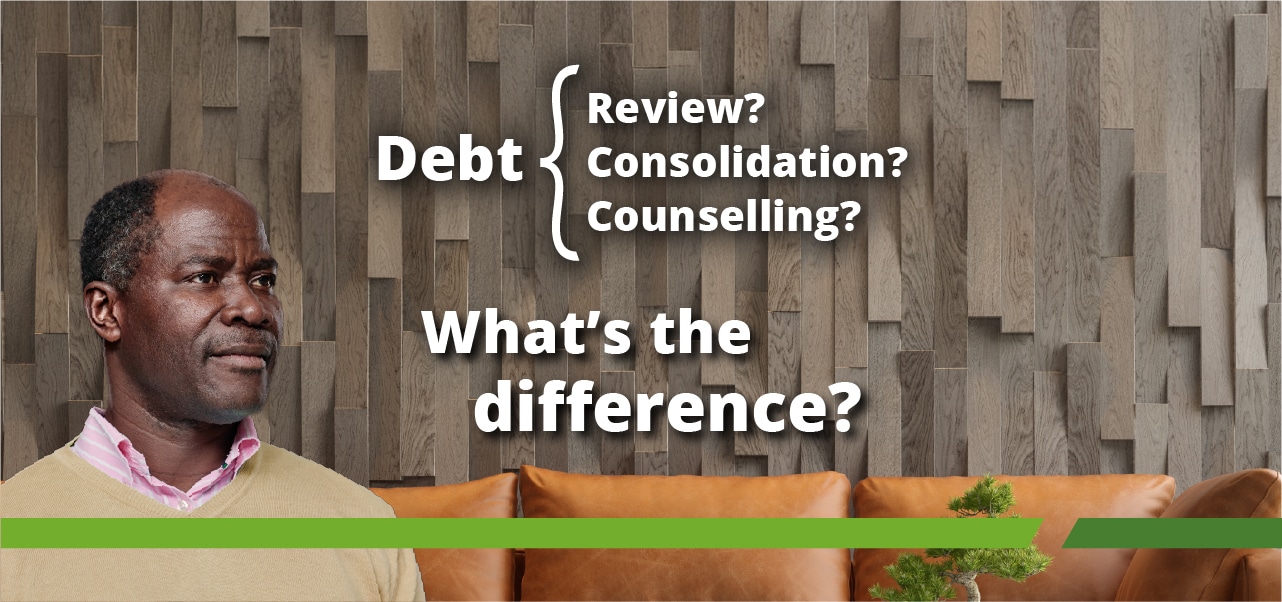
If you’re juggling multiple debt accounts every month — retail accounts, credit cards, personal loans or asset finance — you’ve probably come across these three terms online. Debt review, Debt Counselling, and Debt Consolidation all promise to make life easier, but they’re not all the same. Many people get confused and end up choosing an option that may not be ideal for their situation. At DebtSafe, we speak to thousands of people every month who are exactly where you might be right now: stressed about missed payments, worried about calls from creditors, and unsure what their real options are.
The good news is that understanding the differences can help you make a clearer decision. Let’s break it down in plain language, the way we explain it to clients every day!
Debt Counselling & Debt Review:
The Regulated Path Under the Law
In South Africa, Debt Counselling and Debt Review are closely connected and often used to describe the same overall solution. Debt Counselling is the professional service you receive from a registered debt counsellor, like Debtsafe. Debt Review is the formal legal process that follows once you’ve been assessed as over-indebted. This route is governed by the National Credit Act. Only Debt Counsellors who are registered with the National Credit Regulator (NCR) can offer it.
When you apply, a debt counsellor, i.e. Debtsafe, analyses your full financial situation — income, expenses, and all your credit agreements. If they determine that you’re over-indebted, they negotiate directly with your credit providers for a revised, reduced and affordable repayment plan over a fixed term. What happens next is powerful: once you applied for Debt Review creditors are notified, you are registered as ‘under debt review’ and the process is underway and you are protected from creditors. This gives you breathing space, so no new judgments, no repossessions of assets like your car or home, and no more harassment.
The counsellor works to restructure your debts into one affordable monthly payment that fits your actual budget after covering essentials like rent, food, and transport. Interest rates on your debt are usually reduced, and the overall repayment plan is designed so you pay what you can realistically afford. Once everything is agreed to (or a magistrate confirms the arrangement through a court order), you make one single payment to a Payment Distribution Agency, not directly to the debt councillor, who then distributes it to all your creditors according to the new agreement. This continues until your debts are cleared according to the new terms.
Many people who go this route report finally being able to sleep at night because the constant pressure eases. However, it’s not a quick fix. The process can take several years to finalise, and while you’re under Debt Review, your credit record shows this status. You also won’t be able to take on new credit until you receive a Clearance Certificate. Once you’ve completed the programme successfully, the Debt Review flag can be removed, and you can start rebuilding your credit profile from a much stronger position.
Debt Consolidation:
Combining Debts into One New Loan
Debt Consolidation works differently. It’s not a legal process — it’s a financial loan product. You apply for a new loan, often called a consolidation loan, from a bank or financial institution. The new loan is used to pay off your existing debts in full – consolidating your existing debt into the one loan. From then on, you only have one monthly repayment to worry about, to one institution. This can feel simpler at first. If you qualify for a loan with a lower interest rate than what you’re currently paying on store cards or older personal loans, your total monthly payment might drop. Some people also stretch the repayment term over a longer period to make the payments smaller.
Keep in mind that you still owe the full amount plus whatever interest the new loan carries. Also, there’s no automatic negotiation with your current creditors, you simply pay off this debt and move it to a new consolidation loan. If your credit score isn’t strong enough, the new loan could come with a higher interest rate, which means you might end up paying more overall, especially if the term is extended. Importantly, Debt Consolidation offers no legal protection. If you miss payments on the new loan, creditors can still act against you just like before. It also requires you to have a steady income and a decent credit profile to get approved on favourable terms. For people who are already struggling badly, qualifying for a consolidation loan at a good rate can be difficult.
The Real Differences at a Glance
Here’s how they stack up in practice:
Which Option Makes Sense for Your Situation?
There’s no one-size-fits-all answer, it really depends on how deep the debt hole is and what your current cash flow looks like. If you’re regularly paying only the minimums, dipping into savings or borrowing from family just to get by, or receiving calls and letters from creditors and debt collectors, then Debt Review through a registered counsellor is often the more protective and sustainable choice. It’s built specifically for over-indebted people who need structured relief and legal safeguards.
If your debts are manageable but scattered across several accounts with different due dates and interest rates, and you have a solid income and credit history, then Debt Consolidation might help you streamline everything into one payment without needing the full legal process. You could also save on interest and admin fees.
The smartest move for most people is to get a proper, no-obligation assessment (link to home page) first. A registered professional can look at your specific situation and tell you honestly which route will work for you.
How DebtSafe Can Support You
At DebtSafe, we’ve been helping South Africans navigate these exact choices for over 15 years. Our debt counsellors are fully registered with the National Credit Regulator. We offer a free initial assessment where we review your situation confidentially and explain your realistic options — whether that’s Debt Review, Credit Repair Services, or simply advice on better budgeting strategies.
We believe in transparency. We’ll walk you through the pros, cons, timelines, and what your monthly payment could look like under each path.
Debt doesn’t have to control your life. Whether you’re leaning toward the lower repayments and legal protection of Debt Review or the simplicity of Debt Consolidation, the first step is getting clear information tailored to you. If you’re ready to explore your options without pressure, reach out to the team at DebtSafe today. You can request your free assessment on our website or give us a call. We’re here to help you find a workable path forward — one step at a time!